If you have been looking for a website design company in Hubli, you have probably noticed something confusing. One provider may offer to build a website for ₹4,999, while another quotes ₹50,000, ₹80,000 or even several lakhs.
Why is there such a huge difference?
Are you paying extra for the same website? Is a more expensive web designer necessarily better? And, most importantly, how much should your business actually spend on a website?
The answer depends on what you expect your website to accomplish.
A simple website that introduces your business, displays your contact details and helps customers find you is very different from a website expected to generate qualified enquiries, showcase hundreds of products, manage property listings or support a company’s long-term SEO strategy.
Having worked with websites, web development and SEO since 2001, I have seen businesses spend money on websites that serve their purpose well. I have also seen websites that look perfectly acceptable on the surface but have serious underlying problems with security, functionality, technical implementation and search visibility.
In this guide, I will explain the typical website design cost in Hubli, what different budgets can realistically deliver, and what you should evaluate before choosing a website designer or agency.
The objective isn’t to convince every business to spend more money. It is to help you understand what your business needs and avoid paying for a website that fails to deliver what you expected.
How Much Does Website Design Cost in Hubli?
As a practical starting point, here are the website development budgets I would consider for different types of projects.
| Website type | Indicative project budget |
|---|---|
| Basic business website | ₹20,000–₹35,000 |
| Professional business website | ₹45,000–₹80,000 |
| Premium or custom website | ₹1.5 lakh onwards |
| Ecommerce website | ₹50,000–₹1 lakh |
These are indicative budgets based on the types of projects we undertake and the requirements involved. They are not fixed market averages or guaranteed quotations.
Your final website design cost will depend on factors such as the number and complexity of pages, design requirements, content, custom functionality, integrations, SEO requirements and ongoing support.
For example, a small business that needs five informational pages and a contact form has very different requirements from a manufacturer that needs an extensive product catalogue or a real estate company that wants its team to manage hundreds of property listings.
Both businesses need a website. They do not need the same solution.
What Can You Expect at Different Website Design Budgets?
Understanding what each budget is intended to cover is more useful than comparing quotations based on price alone.
1. Basic Business Website: ₹20,000–₹35,000
A basic website can be an appropriate starting point for a small business that needs a professional online presence without extensive functionality.
For example, a local consultant, retailer, service provider or professional may need a website that introduces the business, explains its services and gives potential customers a straightforward way to get in touch.
Depending on the agreed scope, a basic website may include:
- Home, About, Services and Contact pages.
- Additional informational pages where required.
- Mobile-responsive layouts.
- Contact or enquiry forms.
- WhatsApp and telephone contact links.
- Basic on-page SEO configuration.
- Essential technical setup and launch testing.
A template-based website can be perfectly adequate for this type of requirement. There is no reason to commission a complex custom system when a simpler solution can do the job.
However, the word basic matters.
A business should not automatically expect a ₹20,000 website to include extensive custom functionality, sophisticated lead management, a large catalogue, complex integrations and comprehensive SEO work.
Before accepting a quotation, ask the provider to explain exactly what is included and what would cost extra.
2. Professional Business Website: ₹45,000–₹80,000
A professional business website is appropriate when your website needs to do more than introduce your company.
Perhaps you want potential customers to discover your services through Google, understand your offerings, evaluate your credibility and submit relevant enquiries.
The project may therefore require more attention to design, content structure, user experience and the path visitors follow before contacting you.
Depending on the scope, a professional website may include:
- Business-specific design and page layouts.
- Clear information architecture and navigation.
- Dedicated service pages.
- Structured enquiry forms and email notifications.
- WhatsApp integration.
- A content management system.
- Search-friendly URLs and page structure.
- Page titles, meta descriptions and other on-page SEO essentials.
- Performance and mobile usability testing.
- Analytics and search performance measurement.
- Security and maintenance considerations.
Not every project needs every feature. The important point is to define the requirements before development begins.
For a business that wants to use its website as a source of enquiries, the additional planning and implementation can make a meaningful difference to how useful the finished website is.
3. Premium or Custom Website: ₹1.5 Lakh Onwards
Some businesses need a website that reflects a more complex business model.
They may have multiple customer segments, a large range of services, detailed product information, advanced enquiry workflows or specific operational requirements.
At this level, the work can extend well beyond visual design.
A premium or custom website project may involve:
- Discovery and requirements planning.
- Competitor and audience research.
- Custom user experience and interface design.
- Complex content architecture.
- Custom development and integrations.
- Advanced forms and lead workflows.
- Content management tailored to the business.
- SEO architecture for multiple services, locations or product categories.
- Performance, security and compatibility testing.
- Migration planning where an existing website needs to be replaced.
The number of pages alone does not determine the cost. A relatively small website with complex workflows may require more development than a much larger informational website.
The right budget depends on the work required to build a reliable solution.
4. Ecommerce Website: ₹50,000–₹1 Lakh
An ecommerce website allows a business to display products, accept orders and sell online.
For a relatively straightforward store, a budget of ₹50,000–₹1 lakh may be a reasonable starting point, depending on the requirements and implementation approach.
The scope may include:
- Product catalogue and category pages.
- Product descriptions, images and pricing.
- Shopping cart and checkout.
- Payment gateway integration.
- Shipping configuration.
- Order management.
- Customer notifications.
- Basic ecommerce SEO.
- Mobile-friendly shopping experiences.
However, ecommerce projects vary considerably.
A store with a limited catalogue and standard checkout is different from a business requiring complex inventory rules, multiple warehouses, ERP integration, custom pricing or automated fulfilment.
Those requirements can push the budget beyond the range above. It is important to evaluate the actual scope before assuming a particular price will cover everything.
Why Do Website Design Quotations Differ So Much?
Imagine two providers quoting for a five-page website.
One quotes ₹15,000. Another quotes ₹60,000.
It is tempting to conclude that the second provider is charging four times as much for the same thing.
But are they actually proposing the same deliverables?
One quotation might cover customising an existing template, adding supplied content and publishing the pages. The other might include business-specific design, content planning, conversion-focused forms, technical SEO, performance work, testing and post-launch support.
Neither price tells the complete story by itself.
A higher quotation does not automatically mean better quality. Likewise, a lower quotation does not automatically mean poor quality.
The useful comparison is between the scope, quality, ownership, security and deliverables—not just the final number.
When comparing website design charges in Hubli, ask each provider to explain:
- How much of the design will be customised?
- Who supplies the content, images and other assets?
- What functionality is included?
- Is mobile responsiveness included?
- What SEO work is included, and what is excluded?
- Are the theme, plugins and other software properly licensed?
- Who owns the website, domain, hosting account and relevant credentials?
- What security, backup and maintenance arrangements are provided?
- What happens if you need additional features after launch?
These questions make it easier to compare quotations fairly.
The ₹4,999 Website: What Should You Check Before Buying?
In the local market, businesses sometimes encounter offers for websites priced at ₹4,999 or similarly low amounts.
I understand why such offers are attractive. A business owner may be starting out, working with a limited budget or unsure whether spending more on a website will produce any return.
The problem isn’t necessarily the price or the use of a template.
A properly licensed, well-configured template can be a sensible solution for a business with straightforward requirements. A freelancer can also deliver excellent work at a competitive price.
The concern arises when a low-cost offer creates expectations that the actual deliverables cannot support.
For example, a basic template installation should not be confused with a carefully planned website that has been designed around the business, its customers, its services and its growth objectives.
There are also practical questions worth asking before accepting an exceptionally cheap quotation.
Is the software properly sourced?
WordPress itself is open-source software, and many WordPress themes and plugins are legitimately available at no cost. However, that does not mean every copy of a commercial theme or plugin circulating online is legitimate or safe.
Ask your provider which themes and plugins are being used, how they were obtained and whether the required licences are in place.
The official WordPress licensing information explains the licensing framework for WordPress and derivative works.
Has the website been checked for security issues?
A website may look fine in a browser while containing problems that are not immediately visible to its owner.
Compromised themes, vulnerable plugins, outdated software and unauthorised content can create security and search visibility problems.
The Indian government’s website security guidelines emphasise the importance of maintaining website software and third-party components and addressing security vulnerabilities.
No provider can honestly promise that a website will never be compromised. What matters is taking reasonable precautions and knowing how problems will be detected and addressed.
Does the website have a purpose beyond looking presentable?
If you want the website to generate business, consider how visitors will discover your services, understand your offering and contact you.
A good-looking homepage is only one part of that process.
The website may also need relevant service pages, useful content, clear navigation, trustworthy business information and effective enquiry mechanisms.
A low-cost website can be a perfectly reasonable starting point. The important thing is knowing what you are buying and whether it matches your expectations.
A Real Estate Website Project We Declined
Let me share an experience that illustrates why the cheapest website quotation is not always the right place to start.
A real estate company in the local market contacted us after working with another website provider.
During our investigation, we found problems that the client had not been aware of. The homepage contained casino-related links, and our audit identified approximately 138 pages associated with gambling and pornographic content on a WordPress website affected by malware.
The client was shocked.
They had a business to run and had assumed their website was doing its job. They had not realised the extent of the problems until we examined it more closely.
This was not simply a case of an outdated design or a homepage that needed a visual refresh. The website had underlying issues that required attention.
But the most interesting part of this experience came when we discussed what the company actually needed.
What the real estate company wanted
The company dealt with multiple property categories, including:
- Residential properties, such as flats in different apartment complexes.
- Commercial properties, including shops in various commercial complexes.
- Agricultural properties, including villas and farmhouses.
The company wanted its team to manage the entire property inventory through the website.
That meant being able to add and update property details, descriptions, images, downloadable documents, floor plans and other relevant information.
The requirements also included property-specific lead capture forms, WhatsApp integration and a website structure that could support its SEO objectives across relevant property types and searches.
In other words, the client needed a system that could support the way its real estate business operated.
It needed more than a collection of attractive pages.
The website would have to organise different types of inventory, make properties easy to discover, allow the internal team to manage information and provide prospective buyers or tenants with a way to enquire about individual properties.
It would also need a considered technical and SEO foundation.
That requires planning, development, testing and ongoing responsibility for the finished implementation.
Then came the budget: ₹20,000
After discussing the requirements, we learned that the client’s budget for the entire project was ₹20,000.
Take a moment to consider the difference between the expected deliverables and the available budget.
The company wanted a property management system built into its website, with multiple categories, structured property information, image and document handling, property-specific enquiries, WhatsApp integration and a strong SEO foundation.
The budget was ₹20,000.
Could someone publish a basic real estate website for that amount? Depending on the scope, template and existing infrastructure, possibly.
But delivering the full set of requirements described above is a very different proposition.
The project needed a realistic scope, a suitable technical approach and enough development and testing effort to produce a reliable result. Security problems also needed to be addressed rather than simply covered up with a new design.
Trying to fit all those requirements into the available budget would have meant making substantial compromises or redefining what the client could expect to receive.
Neither outcome would have served the client’s stated objectives well.
So we declined the project.
Not because the client’s budget was unimportant, and not because every business must spend lakhs on a website.
We declined because we did not believe the requested solution and the available budget were aligned.
We could have accepted the project, promised more than the budget could reasonably support and attempted to make it work. But that would have risked delivering another website that fell short of the business’s expectations.
In our view, it was more responsible to explain the mismatch than to accept work that could not be properly scoped at that price.
The client had every right to work within a ₹20,000 budget. The better next step would have been to prioritise the essential requirements, build a smaller first version and plan additional functionality for a later phase—or allocate a more realistic budget for the complete system.
This distinction matters.
A limited budget is not the problem. Expecting a complex business system to be delivered within a budget intended for a much simpler website is the problem.
The purpose of a professional website provider should be to help clients understand those trade-offs before the project begins.
Why Many Business Websites Fail to Deliver Results
In my experience, one of the challenges in the Hubli–Dharwad market is that some business owners view website development primarily as an expense to minimise rather than an investment to evaluate.
That attitude is understandable.
Business owners have salaries, rent, inventory, equipment, marketing and numerous other expenses to manage. Unlike a physical shop or a piece of machinery, a website can sometimes feel intangible. It is not always obvious how much value it will produce.
But treating every website as a commodity creates its own problems.
If the only objective is to get something online at the lowest possible price, important questions can be overlooked.
What should the website help the business achieve? Who is the intended audience? What information do customers need before they enquire? How will the website attract relevant visitors? What happens when the business expands its services or product range?
Without clear answers, a website can become little more than an online brochure that receives little attention after launch.
That does not mean every business needs an expensive website or that a new website automatically generates leads.
It means the project should begin with a clear understanding of the business requirements.
For example:
- A doctor may need accurate information about treatments, qualifications, appointments and clinic locations.
- A manufacturer may need detailed product pages, specifications and a straightforward way for prospective buyers to request quotations.
- An educational institution may need programme information, admission details, facilities and enquiry forms.
- A retailer may need product discovery, location information or ecommerce functionality.
- A real estate company may need a structured property catalogue and enquiry workflows for individual listings.
These businesses have different requirements. Their websites should reflect those differences.
A website that looks good but fails to answer customer questions, support enquiries or communicate the business’s strengths may not deliver the results its owner expects.
This is also why I believe website development should be considered alongside the wider business and marketing strategy. You can learn more about our background and approach on the About Web Design Hubli page.
What Actually Determines Website Development Cost?
Several factors influence how much a website costs. Understanding them will help you evaluate quotations more accurately.
1. Design and user experience
A template customised with your logo, colours and content requires a different amount of work from a design developed around your business requirements.
Custom design may involve research, page planning, wireframes, interface design, revisions and testing.
The right approach depends on your objectives. Custom design is not automatically necessary for every small business.
2. Number and complexity of pages
The number of pages affects cost, but it is not the only consideration.
Five simple informational pages may require relatively little development. Five pages containing complex calculators, interactive features, integrations or custom data may require considerably more.
The important question is what each page needs to do.
3. Content and information architecture
A website needs to communicate clearly.
Content planning, writing, organising services, creating product categories and structuring internal links can require substantial effort, particularly for businesses with multiple offerings.
If the client supplies complete, accurate content, the project may be simpler than one requiring extensive research, writing and content preparation.
4. Custom functionality and integrations
Features such as advanced enquiry forms, appointment systems, property management, customer accounts, payment gateways and third-party integrations affect both development time and testing requirements.
The more the website needs to interact with other systems or support complex business workflows, the more carefully it must be planned.
5. SEO requirements
SEO is not a single setting that can be switched on at launch.
A website can be developed with a strong technical foundation, including logical page structures, descriptive URLs, appropriate metadata, crawlable links and good mobile usability.
However, competing for relevant search terms may also require useful content, local relevance, a clear service structure and ongoing work based on performance.
Google’s SEO Starter Guide explains the fundamentals of making websites easier for search engines and people to understand.
A website’s SEO foundation is important, but no responsible provider should guarantee a particular Google ranking simply because a website has been developed.
6. Security, maintenance and ownership
Launching a website is not necessarily the end of the work.
Depending on the technology, a website may require software updates, backups, monitoring, security checks, compatibility fixes and technical support.
Before signing a quotation, clarify which services are included in the initial price and which will incur recurring or additional charges.
The goal is not to buy every possible service. It is to understand what your website needs and who will be responsible for maintaining it.
What Should You Ask Before Hiring a Website Design Company in Hubli?
Before choosing a provider, ask these practical questions.
- What exactly will be delivered? Request a clear scope covering pages, functionality and integrations.
- Will the design be customised or template-based? Either can be suitable, provided it matches your requirements.
- Who will provide the content? Clarify responsibility for text, photography, product information and other assets.
- What SEO work is included? Distinguish basic technical and on-page setup from ongoing SEO services.
- How will the website be secured and maintained? Ask about software updates, backups and post-launch support.
- Who owns the website and accounts? Clarify access to the domain, hosting, CMS, licences and relevant credentials.
- What happens if your requirements change? Understand the process and cost for additional functionality.
- How will success be measured? Depending on the business, this might include relevant enquiries, calls, appointment requests, quotation requests or ecommerce transactions.
You can also review examples of our work on the Web Design Hubli portfolio to understand the types of website projects and investigations we publish.
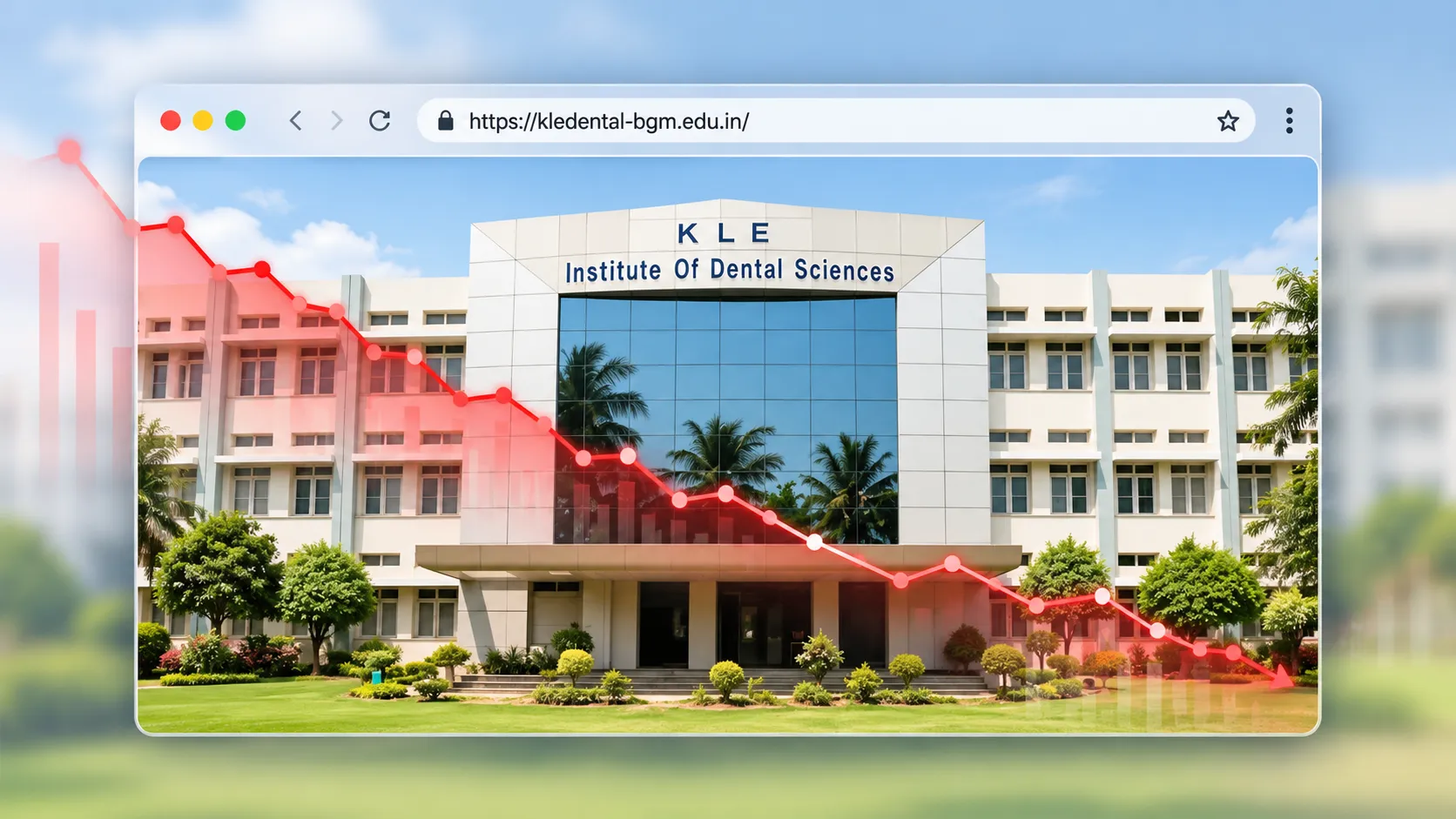
For a practical example of looking beyond the visual appearance of a website, read our KLE Dental College website audit. It illustrates why evaluating a website can involve more than looking at its design.
And if your business already has a website, our guide to when a Hubli business should consider rebuilding its website can help you think through whether a redesign is actually necessary.
Is a Website an Expense or an Investment?
The honest answer is that it can be either, depending on how it is planned, implemented and used.
A website that is launched and forgotten may deliver very little value. Spending more money does not automatically change that.
On the other hand, a website that communicates your offering clearly, helps customers discover relevant information, builds confidence and supports enquiries can become a useful business asset.
The return depends on the business, the quality of the implementation, the demand for its products or services and the work done to attract and convert the right visitors.
For some businesses, a straightforward ₹25,000 website may be entirely sufficient.
For others, a more advanced website may be justified because it supports important sales processes, manages extensive information or plays a central role in generating leads.
The goal should not be to spend as little as possible—or as much as possible.
It should be to choose a solution that makes commercial sense.
Frequently Asked Questions About Website Design Cost in Hubli
How much does website design cost in Hubli?
A basic business website may cost ₹20,000–₹35,000, while a professional business website may fall between ₹45,000 and ₹80,000. Premium or custom websites can start at ₹1.5 lakh, and ecommerce websites may cost ₹50,000–₹1 lakh for relatively straightforward requirements. The final cost depends on scope and functionality.
Is ₹5,000 enough to build a business website?
A very limited template-based website may be possible at a low price, depending on what is included. However, you should carefully check the scope, software licensing, security, content, mobile usability, SEO setup and ongoing support. Do not assume that an inexpensive website includes custom development or advanced functionality.
How much does a WordPress website cost in Hubli?
The cost depends on whether the project involves a basic theme setup, a customised design or a more complex WordPress implementation. A simple website may fit within a modest budget, while custom functionality, integrations, extensive content and advanced requirements can increase the cost considerably.
How much does an ecommerce website cost in Hubli?
A relatively straightforward ecommerce website may fit within a ₹50,000–₹1 lakh budget, depending on the scope. Complex product catalogues, custom integrations, inventory workflows and other advanced requirements may need a higher budget.
Does website development cost include SEO?
Not necessarily. Some website projects include basic on-page SEO and technical configuration, while others treat SEO as a separate service. Ask for a clear list of deliverables so you understand what is included at launch and what ongoing SEO work would cost.
Should I hire a freelancer or a web design agency?
Both can be appropriate choices. Compare their experience, proposed solution, deliverables, communication, ownership arrangements and support—not just whether they are a freelancer or an agency. Choose the provider whose approach fits your requirements and budget.
Do I need to pay for website maintenance every year?
That depends on the website’s technology, functionality and support requirements. Domain registration and hosting may involve recurring fees, while maintenance arrangements vary by provider. Clarify these costs before committing to a project.
Can a website guarantee first-page rankings on Google?
No responsible provider can guarantee a specific Google ranking. Website development can establish a sound technical and content foundation, but search visibility depends on many factors, including relevance, competition, content quality and the site’s overall search presence.
Planning a Website for Your Business in Hubli or Dharwad?
Before deciding how much to spend, start by identifying what you want your website to accomplish.
Do you need a simple online presence? A professional website to generate enquiries? An ecommerce store? Or a more advanced platform to support your business operations?
Once those requirements are clear, it becomes much easier to determine a realistic budget and prioritise the features that matter.
At Web Design Hubli, we believe the right website should be planned around the business—not just assembled around a template or a list of pages.
If you’re considering a new website or want to understand what your existing website needs, tell us about your business, your objectives and your budget.
Planning a website project?
See our work or tell us what you're building.